
You Can Make More Money by Working … Even If Your Benefits Change
Benefits programs are designed to encourage people to start working. For that reason, you can almost always make more money by working, even if your benefits do change.
Working and Getting Supplemental Security Income
Benefits programs are set up to encourage people to work. They act as a safety net while you try to find work. Because getting people to work is the goal, you’ll always have more money in your pocket when you work! That’s true even if your benefits, like Supplemental Security Income (SSI), change.
How does it work? For every $2 you earn, your SSI check only drops by $1. The example below can help explain things.
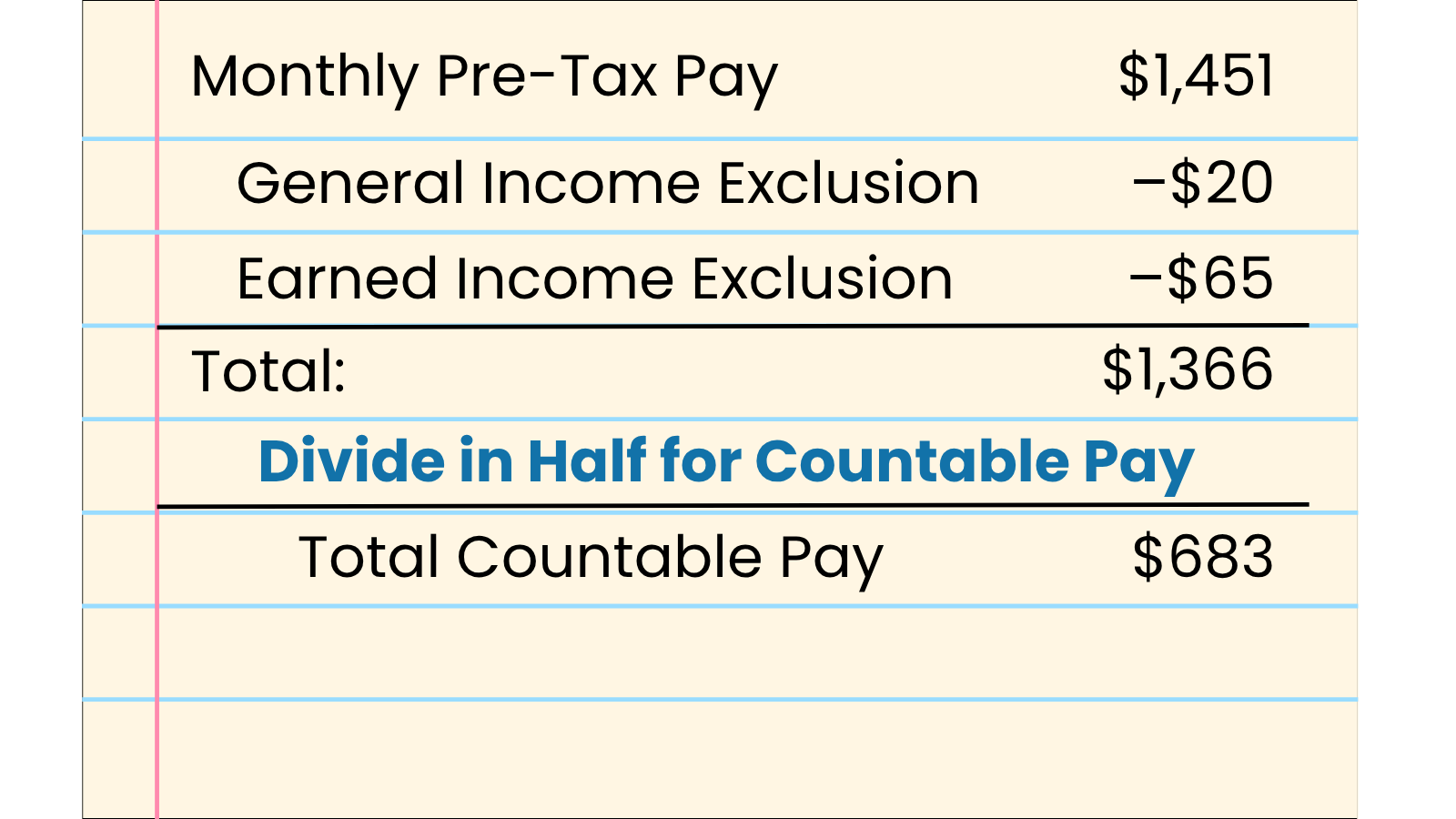
Each month, Crystal earns $1,451 (before taxes) at her job at the jewelry store. The government does not count $20 for the General Income Exclusion and $65 for the Earned Income Exclusion. After that, the government only counts half of that money when deciding how much Crystal’s SSI payment should be. So, her total countable pay is only $683.
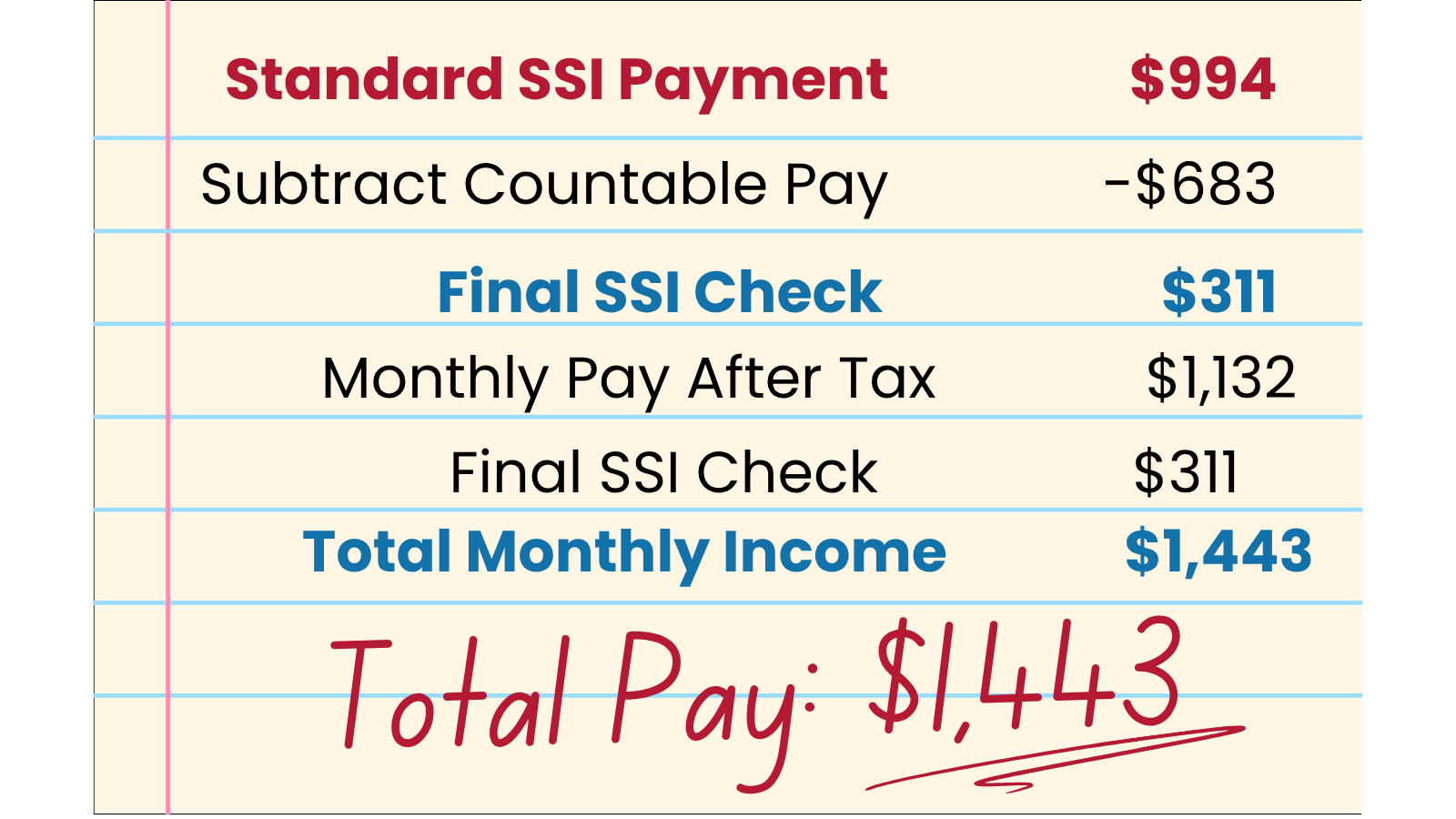
Before working, Crystal’s SSI payment was $994. Now, after the government subtracts her countable pay, Crystal gets $311 in SSI ($994 - $683 = $311).
After taxes, Crystal gets $1,132 in her paycheck from work. After the government subtracts her countable pay, she also gets $311 in her SSI check each month. Adding her wages and her SSI check, Crystal gets $1,443 each month. But before she started working, she only got $994, all from SSI.
In other words, now that she is working, Crystal earns $449 more every month, even though her SSI check is lower.
How Working Affects Social Security Disability Insurance (SSDI)
Your SSDI benefits don’t stop the moment you start working. During your Trial Work Period (TWP), you’ll get your SSDI check and your wages. This gives you a low-risk chance to try working.
After the TWP, you still keep your entire SSDI check if your monthly pre-tax earnings are below a certain number. This number is called Substantial Gainful Activity (SGA). SGA can vary by year.
Example: Earnings and SGA
Pretend you get a new job working in a coffee shop for $11.25 an hour. That means each month you earn just under $1,500. In 2026, SGA for someone who isn’t blind is $1,690 a month. So, even with this new job, you still get to keep your entire SSDI check.
-
The Trial Work Period is a time when you can try out working. It lasts for nine months.
During those nine months, you can earn as much as you want and it won’t affect your benefits. No matter how much you make, you’ll still get your full cash and medical benefits—so long as you follow the rules.
-
Substantial gainful activity (SGA) refers to the most money you can earn in a month and still qualify for SSDI. If you earn more than the SGA amount, you no longer qualify for SSDI.
The SGA amount changes each year. It is also different if you are blind or if you have a different disability.
You can learn more about SGA on the Social Security Administration’s website.
What if You Stop Working and Need Your Benefits Back?
It may happen that you have to pause working and need your benefits back. If that happens, you can file for Expedited Reinstatement of Benefits (EXR). EXR is a shorter application that can get your benefits back quickly.
You can receive up to six months of temporary benefits while Social Security reviews your request. If your request is denied, you usually don’t have to pay those temporary benefits back.
But, you can only apply for EXR if:
You apply within 60 months of your benefits stopping
The disability that stops you from working is the same as before

Have More Questions about Working?
These resources can help answer your questions about how working more can affect your specific benefits.
Indiana Works
Indiana Works is part of a federal program that answers questions on benefits and work. They have trained Incentive Coordinators ready to help you with your questions.
Phone: 1-855-641-8382
Indiana Institute on Disability and Community (IIDC)
The IIDC has information about benefits and programs that support young adults, students, and adults interested in working more. Their fact sheets explain some of the Social Security Administration's work incentive programs. They also have links to other resources for housing, health care, and savings.